Mold Remediation in Murfreesboro, Step by Step
Mold remediation is the careful removal of mold-damaged material so it does not spread through the house. Tennessee does not issue a separate mold license, so knowing the steps is how a homeowner judges whether the job was done right.
Mold remediation in Murfreesboro follows a set order: fix the moisture, contain the area under negative air, remove porous material with growth, HEPA-clean what stays, dry it, check the result, then rebuild. HomeGuide (2026) says small to medium jobs take 1 to 3 days; This Old House (2026) puts a typical job at $1,200–$3,750.
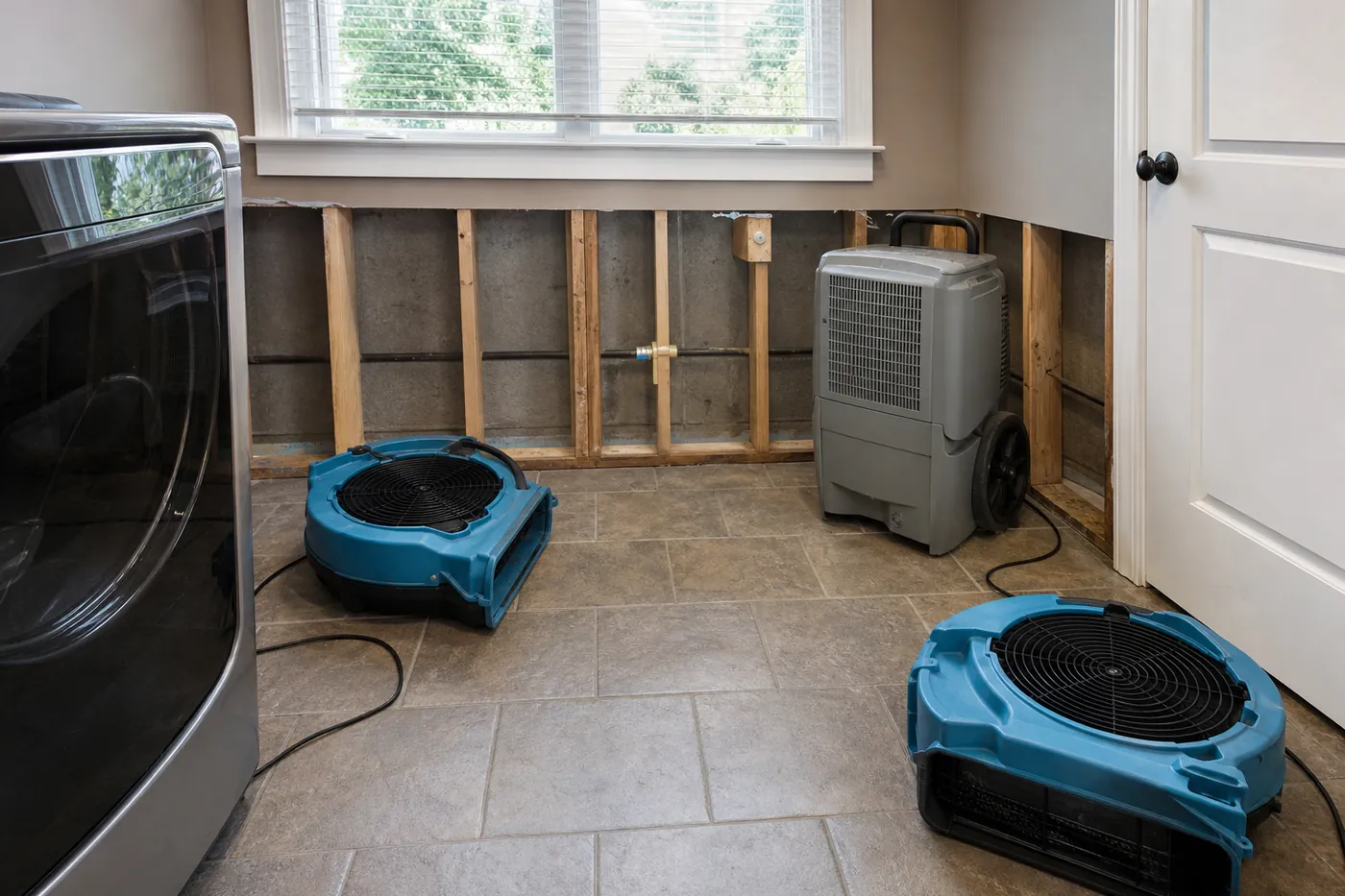
The steps of mold remediation in Murfreesboro
- Source. The leak, flashing or condensation problem is fixed, or booked with the trade that will fix it.
- Containment. Plastic sheeting closes off the work area, and an air filtration unit keeps it under negative pressure.
- Removal. Drywall, insulation, carpet pad and other porous material with growth is cut out and bagged inside the containment.
- Cleaning. Studs, joists and other hard surfaces get a HEPA vacuum and a wipe. Spraying bleach or another biocide is not routine practice under EPA guidance.
- Drying. Materials return to normal moisture readings before anything is closed up.
- Checking. A visual inspection and moisture readings, and samples if agreed, confirm the area is clean and dry.
- Rebuild. New insulation, drywall, flooring and paint go in.
Tennessee licensing for remediation and the rebuild
The Tennessee Board for Licensing Contractors lists mold remediation as an S-F specialty classification, and its outline notes that specialty classifications do not require a trade exam. There is no separate mold license or mold inspector license. What usually decides the license is the dollar value: a contractor's license for projects of $25,000 or more, and in Rutherford County, one of nine counties that adopted the law, a Home Improvement license for residential repair and remodeling from $3,000 to $24,999. Ask which license covers each part of your job and look it up at verify.tn.gov.
Questions to ask before you sign
- What caused the moisture, and who is fixing it?
- How will you contain the area, and will the air handler be shut off or sealed?
- How much drywall, insulation and flooring, in square feet, do you expect to remove?
- How will you show the job is finished: moisture readings, a visual check, samples?
- Is the rebuild included, and under which license?
- What does your warranty cover, in writing?
Compare quotes in the Murfreesboro mold removal cost guide.
Testing: usually optional
Visible growth rarely needs a lab, per the EPA, and the CDC's view is that the species does not matter, because any indoor growth comes out the same way. A test is worth paying for in two cases: an odor with no visible source, or proof after the work that the area is clean.
Questions homeowners ask
Can I stay in the house during mold remediation?
For a contained job in one room, usually yes. HomeGuide (2026) notes that many pros recommend leaving for large or severe jobs. If the air handler or ducts are part of the work, the cooling or heating may be off for a day or more, so plan around the season.
What happened, and where is the mold?
Tell the specialist roughly when the house was built, the room, and what got wet: a pipe, a storm, the river, or nothing you can name. If walls or floors will need rebuilding, mention it. A mold specialist serving Murfreesboro receives your note and replies.